 https://orcid.org/0009-0009-1599-2739






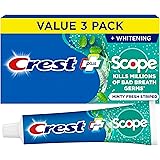
Crest + Scope Whitening Toothpaste - Pack of 3, 5.4 Oz Tubes - Anticavity Fluoride Toothpaste, Fresh Breath, Kills Germs - Tartar Protection, Enamel Protection - Minty Fresh Flavor
$8.99 (as of February 27, 2026 06:51 GMT +07:00 - More infoProduct prices and availability are accurate as of the date/time indicated and are subject to change. Any price and availability information displayed on [relevant Amazon Site(s), as applicable] at the time of purchase will apply to the purchase of this product.)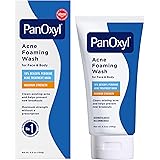
PanOxyl 10% Benzoyl Peroxide Acne Foaming Wash, Maximum Strength, Daily Acne-Fighting Face and Body Cleanser, Face Wash to Clear, Treat and Prevent Acne Pimples and Stubborn Breakouts, 5.5 Oz Tube
$9.88 (as of February 27, 2026 06:51 GMT +07:00 - More infoProduct prices and availability are accurate as of the date/time indicated and are subject to change. Any price and availability information displayed on [relevant Amazon Site(s), as applicable] at the time of purchase will apply to the purchase of this product.)
The Ordinary Niacinamide 10% + Zinc 1%, Smoothing Serum for Blemish-Prone Skin
$6.00 (as of February 27, 2026 06:51 GMT +07:00 - More infoProduct prices and availability are accurate as of the date/time indicated and are subject to change. Any price and availability information displayed on [relevant Amazon Site(s), as applicable] at the time of purchase will apply to the purchase of this product.)
The Ordinary Hyaluronic Acid 2% + B5 (with Ceramides), Multi-Depth Hydration Serum for Plumper, Smoother Skin
$9.90 (as of February 27, 2026 06:51 GMT +07:00 - More infoProduct prices and availability are accurate as of the date/time indicated and are subject to change. Any price and availability information displayed on [relevant Amazon Site(s), as applicable] at the time of purchase will apply to the purchase of this product.)
Vanicream Daily Facial Moisturizer With Ceramides and Hyaluronic Acid - Formulated Without Common Irritants for Those with Sensitive Skin, 3 fl oz (Pack of 1)
$13.97 (as of February 27, 2026 06:51 GMT +07:00 - More infoProduct prices and availability are accurate as of the date/time indicated and are subject to change. Any price and availability information displayed on [relevant Amazon Site(s), as applicable] at the time of purchase will apply to the purchase of this product.)
Aquaphor Healing Ointment Advanced Therapy Skin Protectant, Dry Skin Body Moisturizer, 7 Oz Tube
$12.97 (as of February 27, 2026 06:51 GMT +07:00 - More infoProduct prices and availability are accurate as of the date/time indicated and are subject to change. Any price and availability information displayed on [relevant Amazon Site(s), as applicable] at the time of purchase will apply to the purchase of this product.)
The Ordinary Glycolic Acid 7% Exfoliating Toner, Brightening and Smoothing Daily Toner for More Even-Looking Skin Tone
$13.50 (as of February 27, 2026 06:51 GMT +07:00 - More infoProduct prices and availability are accurate as of the date/time indicated and are subject to change. Any price and availability information displayed on [relevant Amazon Site(s), as applicable] at the time of purchase will apply to the purchase of this product.)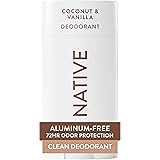
Native Deodorant Contains Naturally Derived Ingredients, 72 Hour Odor Control | Deodorant for Women and Men, Aluminum Free with Baking Soda, Coconut Oil and Shea Butter | Coconut & Vanilla
$13.97 (as of February 27, 2026 06:51 GMT +07:00 - More infoProduct prices and availability are accurate as of the date/time indicated and are subject to change. Any price and availability information displayed on [relevant Amazon Site(s), as applicable] at the time of purchase will apply to the purchase of this product.)
CeraVe Hydrating Facial Cleanser, Moisturizing Face Wash For Dry Skin, Hyaluronic Acid + Ceramides + Glycerin, Hydrating Cleanser For Normal To Dry Skin, National Eczema Association Certified
$15.97 (as of February 27, 2026 06:51 GMT +07:00 - More infoProduct prices and availability are accurate as of the date/time indicated and are subject to change. Any price and availability information displayed on [relevant Amazon Site(s), as applicable] at the time of purchase will apply to the purchase of this product.)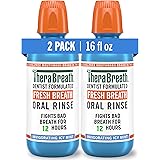
TheraBreath Fresh Breath Mouthwash, Icy Mint Flavor, Alcohol-Free, 16 Fl Oz (Pack of 2)
$15.06 (as of February 27, 2026 06:51 GMT +07:00 - More infoProduct prices and availability are accurate as of the date/time indicated and are subject to change. Any price and availability information displayed on [relevant Amazon Site(s), as applicable] at the time of purchase will apply to the purchase of this product.)Cryptocurrency analyst Ali Martinez is flagging a familiar — and historically ominous — technical signal for Bitcoin: a short-term moving average has just crossed below a longer-term one, a pattern that has preceded sharp sell-offs in previous cycles.
What happened
– On a daily chart Martinez shared on X, Bitcoin’s 21-day simple moving average (SMA) recently slipped under its 50-day SMA. SMAs average price over a set period to smooth out noise; traders often watch crossovers between different SMAs for trend signals.
– Historically, this particular 21/50-day crossover has acted like a “death cross” for Bitcoin. Martinez’s decade-long chart highlights prior instances where the signal was followed by steep drawdowns, typically in the 54%–69% range.
– The most recent comparable instance was the 2022 crossover, which preceded a near-66% decline into that bear-market bottom.
Why it matters now
– If this crossover again ushers in bearish momentum, on-chain metrics suggest a possible downside target. Martinez pointed to the Realized Price-to-Liveliness Ratio — an on-chain level that blends two indicators:
– Realized Price: the cost basis of the average investor/address on the Bitcoin blockchain.
– Liveliness: a measure of how much long-term holders are spending versus HODLing.
– Martinez noted on X: “The last time Bitcoin $BTC fell below the Realized Price-to-Liveliness Ratio, it moved toward the Realized Price.” Today the ratio sits around $87,500 and the Realized Price is about $56,000.
Short-term price context
– Bitcoin briefly dipped below the $87,500 Realized Price-to-Liveliness mark during a Sunday pullback but recovered above it. At the time of writing, BTC is trading around $89,500, roughly 2% higher over the past seven days.
Bottom line
– The 21/50-day SMA crossover is a warning signal with a track record in prior cycles, and on-chain levels give a framework for potential downside if selling intensifies. As always, moving averages and on-chain ratios are probabilistic tools — useful for context but not guarantees — so traders and investors should weigh signals alongside risk-management plans and broader macro conditions.
Read more AI-generated news on: undefined/news
Source link
Related Posts: