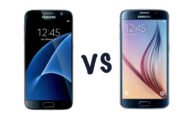
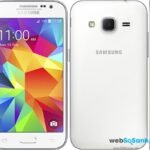
The article below will compare Samsung Galaxy S7 and Samsung Galaxy S6 through each criterion, so that we can have a clearer view of these two smartphone models.
– Not many improvements with photography applications and TouchWiz UI
Compare the design of Samsung Galaxy S7 and Galaxy S6
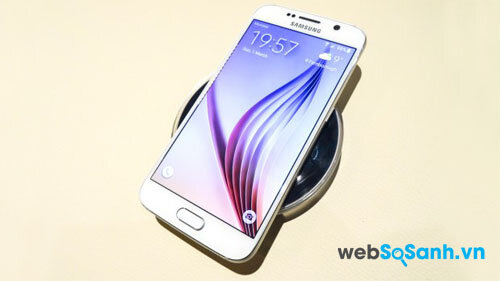
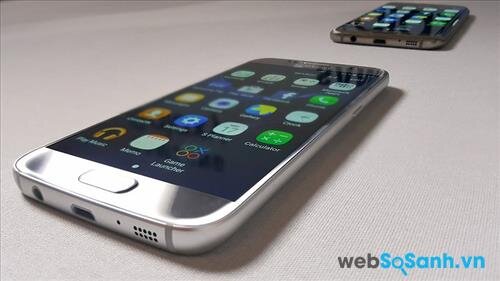
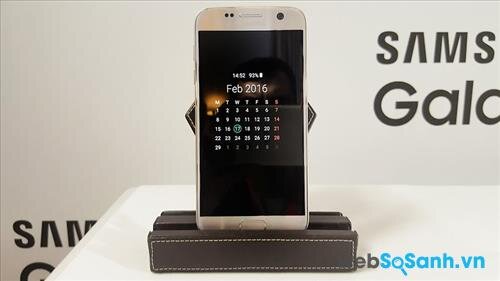
The Samsung Galaxy S7 has an appearance that is not much different from its predecessor, the S6: still with a 5.1-inch screen, an aluminum frame surrounding it, and two layers of Gorilla Glass 4 glass front and back. The S7 in this review is the silver case version, and under soft light, it easily makes even people who are not tech-savvy know that this is a high-end smartphone.
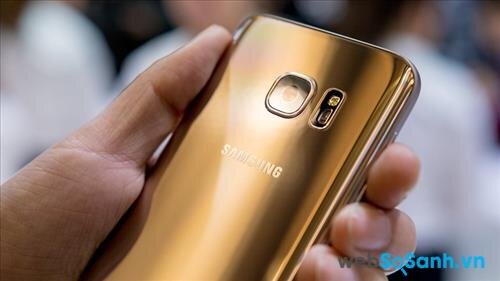
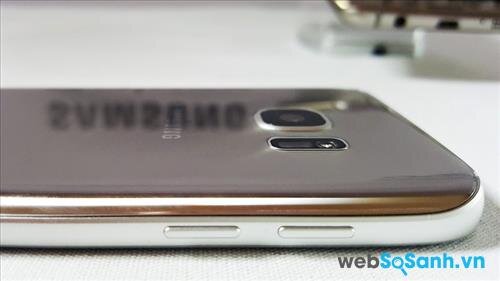
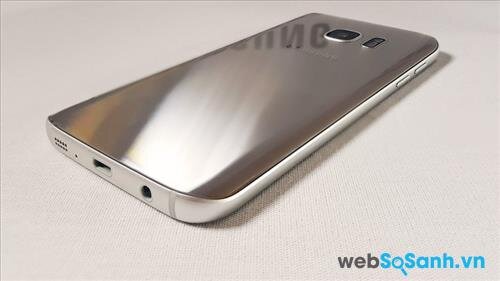
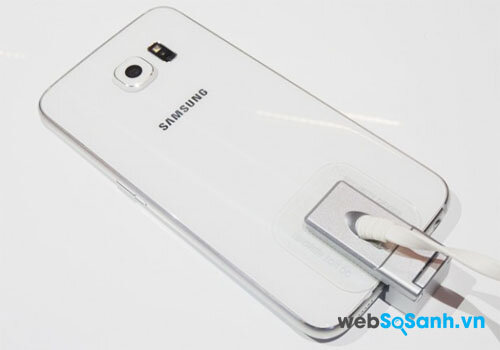
In terms of design, the S7 is more rounded at the four corners, and the camera no longer protrudes from the surface like on last year’s S6. These changes contribute significantly to increasing the perfection of the Galaxy S7, as well as helping to create a comfortable, comfortable feeling during use. However, on the back, the camera sensor and Flash cluster still have a metal border surrounding it, slightly raised above the surface and not really “flat” when placed on the surface.
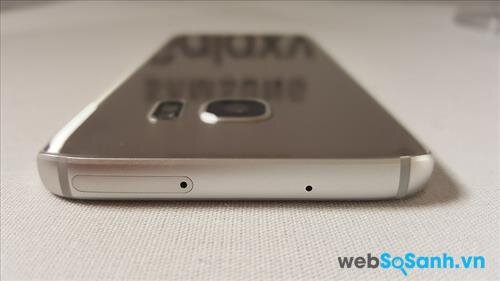
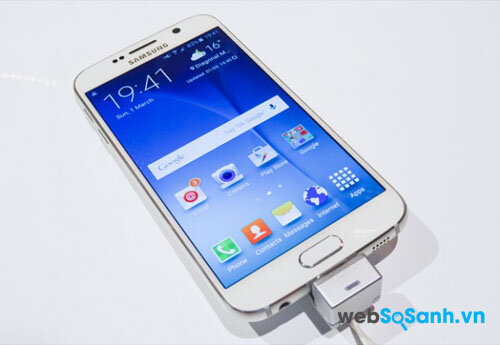
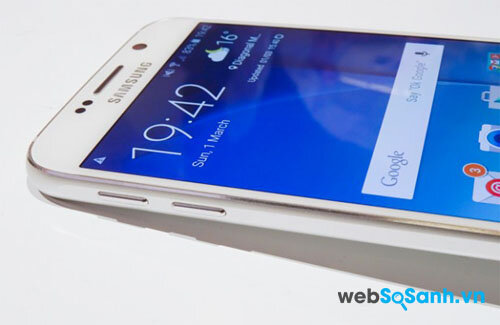
The front of the device is still where the fingerprint sensor is located at the Home button, the thermal sensor near the front camera, and the cluster loudspeaker outside. On the side are two volume up and down keys on the left side, and a power button on the right side. The top edge is where Samsung places the nanoSIM slot, and the microSD memory card.
In terms of size, the Samsung Galaxy S7 is 7.9mm thin, which is 1.1mm thicker than the previous generation Galaxy S6. However, during use, users can hardly feel this change clearly.
The first highlight that can be easily observed is that Samsung has officially blown away the traditional plastic shell design, which was criticized a lot for creating a cheap feeling. Instead, now technology enthusiasts can be completely comfortable with the luxurious metal shell on the Samsung Galaxy S6 version.
On the front of the device, two layers of screen borders are made of finely machined metal, highlighting the impressive thinness of only 6.8mm of the Galaxy S6, along with a layer of the latest Gorilla Glass – 4th version.
However, both the front and back of the Samsung Galaxy S6 appear to be quite sticky with fingerprints during use. Besides, this smartphone also does not come with water and dust resistance like on many other super products, especially the Sony Xperia series.
When looking more closely at the edges, especially the four slightly rounded edges of the Samsung Galaxy S6, it can be seen that it seems to have been greatly influenced by the design of the Galaxy Alpha version, or even from Apple’s iPhone models. However, the Galaxy S6 still possesses its own unique design features and high object detail.
The Samsung Galaxy S6 is very comfortable to hold in the hand with a standard 5.1-inch screen. In fact, that comfortable feeling in the hand is one of the most important factors that makes the Galaxy S6 highly appreciated by experts, even more than its brother S6 Edge, or competitors like iPhone 6, 6 Plus.
On the back you can also easily see the main camera protruding slightly from the back of the device, and this is explained by the fact that the body is too thin – almost similar to the iPhone 6 / 6 Plus. However, this detail does not really affect its luxurious beauty much, as well as the inconvenience during use.
Evaluation of features on Galaxy S7 and Galaxy S6
The Galaxy S7 version in the review uses the Exynos 8890 processor researched and developed by Samsung, providing impressive power with a speed of 2.3 GHz with the help of a 4 GB RAM kit. Samsung said that its new processor core delivers 30% higher performance than last year’s generation used on the Galaxy S6.
However, because both Samsung Galaxy lines, as well as most high-end smartphones today, perform well beyond expectations in entertainment tasks such as watching movies, playing heavy 3D games, as well as multitasking, we can hardly feel the difference between them during use.
The device is equipped with a 3000mAh battery, which is quite high compared to the general level and 5.1 inch screen size on the mobile market today. This combined with the fast charging and wireless charging capabilities on the S7 promises to alleviate battery concerns during use.
Samsung Galaxy S7 possesses the Always On feature like on LG’s latest flagship lines, making the screen always ready to display even when switched to locked mode. This allows users to easily operate some device functions such as calendar, clock, notifications, and other widgets right on the lock screen without having to open the device.
This year’s S7 generation also surprised by bringing two functions that are always expected on smartphones: support for external memory cards, and water and dust resistance. Regarding water resistance, the Galaxy S7 meets the highest standard at the present time of IP68, helping the device level its shortcomings when compared to high-end Sony Xperia lines. The microSD card support feature also helps Samsung Galaxy S7 outperform its “difficult” rival iPhone.
Mentioning the Samsung Galaxy S7 without mentioning its photography capabilities is a big mistake. This year, Samsung surprised everyone by reducing the resolution of the S7 from 16 MP on the S6 to just 12 MP. However, with the use of Dual Pixel technology, which is only equipped on high-end DSLR and Mirrorless cameras, along with increasing the sensor size on the S7, Samsung is on the way to prove that it can fill all the shortcomings of today’s cameras, and become a smartphone capable of shooting and focusing well in all different conditions.
Specifically, the Samsung Galaxy S7, after many tests, is showing that the focusing speed in low light conditions cannot be more impressive at approximately an instantaneous level, instead of a few seconds like today’s high-end smartphone models. Photos taken on the Samsung Galaxy S7 in low light conditions also display more realistic colors, and fewer details are out of focus.
For its part, the Samsung Galaxy S6 also brings a significant hardware upgrade compared to its predecessor, the Galaxy S5. Specifically, it owns an Exynos 7420 processor with a powerful octa-core core, which is considered to be on par with the new Snapdragon 810 chip used on a series of new products launched in 2015 such as HTC One M9 or LG G Flex 2.
In fact, the Exynos 7420 processor is even more highly rated by many technology magazines thanks to its unique power saving features. Specifically, the 14nm Exynos generation used on the Galaxy S6 is claimed by Samsung to bring 20% faster speed and 35% more power savings than the 20nm generation on the Galaxy Note 4.
Samsung Galaxy S6 also supports 3GB of RAM, not 4GB as many previously predicted. However, they are DDR4 RAM, not DDR3 like on other smartphone models, and Samsung claims that the new RAM technology helps increase processing speed by up to 80% compared to the old generation.
Overall, the Samsung Galaxy S7 absolutely deserves to be a comprehensive upgrade compared to the previous generation S6 with a more consistent design, stronger performance, and many notable features, the most outstanding of which are the ability to take photos, water resistance, and support for expandable memory cards. These promise to be significant advantages to bring Samsung’s new product lines to the top of the global market in the near future.
Regarding price, the S7 has just been launched and is listed at 15.5 million VND, while the Samsung Galaxy S6 is currently only approximately 10 million VND.
Websosanh.vn – The first price comparison website in Vietnam

 https://orcid.org/0009-0009-1599-2739