 https://orcid.org/0009-0009-1599-2739






Boka Fluoride Free Toothpaste, Nano Hydroxyapatite Toothpaste, Appropriate for Sensitive Teeth - for Adult, Kids Oral Care - Ela Mint Flavor, 4 Fl Oz 1Pk US Manufactured
$11.62 (as of March 4, 2026 23:40 GMT +07:00 - More infoProduct prices and availability are accurate as of the date/time indicated and are subject to change. Any price and availability information displayed on [relevant Amazon Site(s), as applicable] at the time of purchase will apply to the purchase of this product.)
The Ordinary Hyaluronic Acid 2% + B5 (with Ceramides), Multi-Depth Hydration Serum for Plumper, Smoother Skin
$9.90 (as of March 4, 2026 23:40 GMT +07:00 - More infoProduct prices and availability are accurate as of the date/time indicated and are subject to change. Any price and availability information displayed on [relevant Amazon Site(s), as applicable] at the time of purchase will apply to the purchase of this product.)
Mighty Patch Original Patch from Hero Cosmetics - #1 Hydrocolloid Acne Pimple Patches for Face, Shrinking Zits & Whiteheads in 1 Use, Nighttime Spot Pimple Stickers for Face, 36 Count
$12.99 (as of March 4, 2026 23:40 GMT +07:00 - More infoProduct prices and availability are accurate as of the date/time indicated and are subject to change. Any price and availability information displayed on [relevant Amazon Site(s), as applicable] at the time of purchase will apply to the purchase of this product.)
CeraVe Moisturizing Cream, Body and Face Moisturizer for Dry Skin, Body Cream with Hyaluronic Acid and Ceramides, Daily Moisturizer, Oil-Free, Fragrance Free, Non-Comedogenic, 19 Ounce
$18.96 (as of March 4, 2026 23:40 GMT +07:00 - More infoProduct prices and availability are accurate as of the date/time indicated and are subject to change. Any price and availability information displayed on [relevant Amazon Site(s), as applicable] at the time of purchase will apply to the purchase of this product.)
CeraVe Hydrating Facial Cleanser, Moisturizing Face Wash For Dry Skin, Hyaluronic Acid + Ceramides + Glycerin, Hydrating Cleanser For Normal To Dry Skin, National Eczema Association Certified
$15.97 (as of March 4, 2026 23:40 GMT +07:00 - More infoProduct prices and availability are accurate as of the date/time indicated and are subject to change. Any price and availability information displayed on [relevant Amazon Site(s), as applicable] at the time of purchase will apply to the purchase of this product.)
Kitsch Dermaplane Razor for Women Face – Face Razors for Women & Men, Eye Brow Razors & Face Shaver – Exfoliating Facial Razor & Dermaplaner as Skin Care Tool for Smoother Skin - Terracotta, 12 pcs
$8.99 (as of March 4, 2026 23:40 GMT +07:00 - More infoProduct prices and availability are accurate as of the date/time indicated and are subject to change. Any price and availability information displayed on [relevant Amazon Site(s), as applicable] at the time of purchase will apply to the purchase of this product.)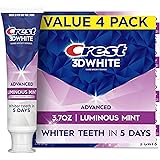
Crest 3D White Advanced Luminous Mint Teeth Whitening Toothpaste, Crest Toothpaste, 3.7 oz Pack of 4 - Helps Remove Surface Stains, Whitens Teeth, Strengthens Tooth Enamel, Protects Against Cavities
$14.01 (as of March 4, 2026 23:40 GMT +07:00 - More infoProduct prices and availability are accurate as of the date/time indicated and are subject to change. Any price and availability information displayed on [relevant Amazon Site(s), as applicable] at the time of purchase will apply to the purchase of this product.)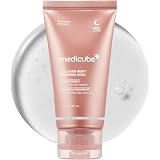
medicube Wrapping Mask Collagen Overnight Peel Off Facial Mask | Elasticity & Hydration Care, Reduces Sagging & Dullness | Hydrolyzed Collagen For Glowing Skin | Korean Skin Care, 2.53 fl.oz
$19.00 (as of March 4, 2026 23:40 GMT +07:00 - More infoProduct prices and availability are accurate as of the date/time indicated and are subject to change. Any price and availability information displayed on [relevant Amazon Site(s), as applicable] at the time of purchase will apply to the purchase of this product.)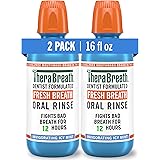
TheraBreath Fresh Breath Mouthwash, Icy Mint Flavor, Alcohol-Free, 16 Fl Oz (Pack of 2)
$15.06 (as of March 4, 2026 23:40 GMT +07:00 - More infoProduct prices and availability are accurate as of the date/time indicated and are subject to change. Any price and availability information displayed on [relevant Amazon Site(s), as applicable] at the time of purchase will apply to the purchase of this product.)
BIODANCE Bio-Collagen Real Deep Mask, Hydrating Overnight Hydrogel Face Mask, Pore Minimizing, Elasticity, Plumping Improvement, Korean Skin Care | 1.19oz(34g) x 4ea
$19.00 (as of March 4, 2026 23:40 GMT +07:00 - More infoProduct prices and availability are accurate as of the date/time indicated and are subject to change. Any price and availability information displayed on [relevant Amazon Site(s), as applicable] at the time of purchase will apply to the purchase of this product.)Ethereum co-founder Vitalik Buterin published a technical “Strawmap” on February 27 laying out how the network could scale up to 1,000x its current transaction capacity — and crucially, do so without forcing small node operators out of the system.
What he posted is less a single roadmap than a three-part strategy focused on execution, data, and state. Taken together, these changes aim to dramatically raise throughput while preserving decentralization.
Near-term: Glamsterdam and parallel verification
– The first, closest upgrade is a protocol patch dubbed “Glamsterdam.” One headline feature is block-level access lists, a change that lets different parts of a block be processed in parallel instead of strictly sequentially. That parallelism reduces verification bottlenecks.
– Reports also say Glamsterdam improves utilization of each 12-second block slot, making it safer to pack more transactions into every block without destabilizing consensus.
– Glamsterdam will also include ePBS-related improvements (details are evolving), and Buterin says these near-term upgrades plus better client software might already get Ethereum to a stable, higher-throughput state. If real-world demand remains modest, the team may deprioritize the full 1,000x push.
Longer-term: ZK-EVMs to offload validators
– The bolder, long-range component centers on zero-knowledge Ethereum Virtual Machines (ZK-EVMs). Instead of every validator re-executing every transaction, ZK-EVMs let validators verify compact cryptographic proofs. Verifying a proof is far lighter than re-running full execution, which lowers hardware requirements for validators.
– Buterin’s public timeline suggests a small group of validators could begin using ZK-based verification as early as 2026, with broader rollout possibly following in 2027. If adoption goes as planned, ZK-EVMs could substantially raise Ethereum’s capacity ceiling without forcing node operators to buy more powerful machines.
State growth: a separate, underappreciated challenge
– Buterin highlighted state growth (the permanent storage burden that comes with deploying large smart contracts) as a distinct problem. Every node must store that state, and unchecked growth raises the long-term cost of running a node.
– His proposed fix is to track “state creation” gas independently from the regular transaction gas cap, so deployments are priced to reflect their ongoing storage costs. Large contracts would still be possible, but their gas billing would more closely match real long-term resource consumption.
A realistic ceiling, not an immediate promise
– The oft-cited “1,000x” figure is presented as a long-term ceiling, not a guarantee for next year. Progress is explicitly phased: each step depends on the previous ones working as intended and on real-world usage trends.
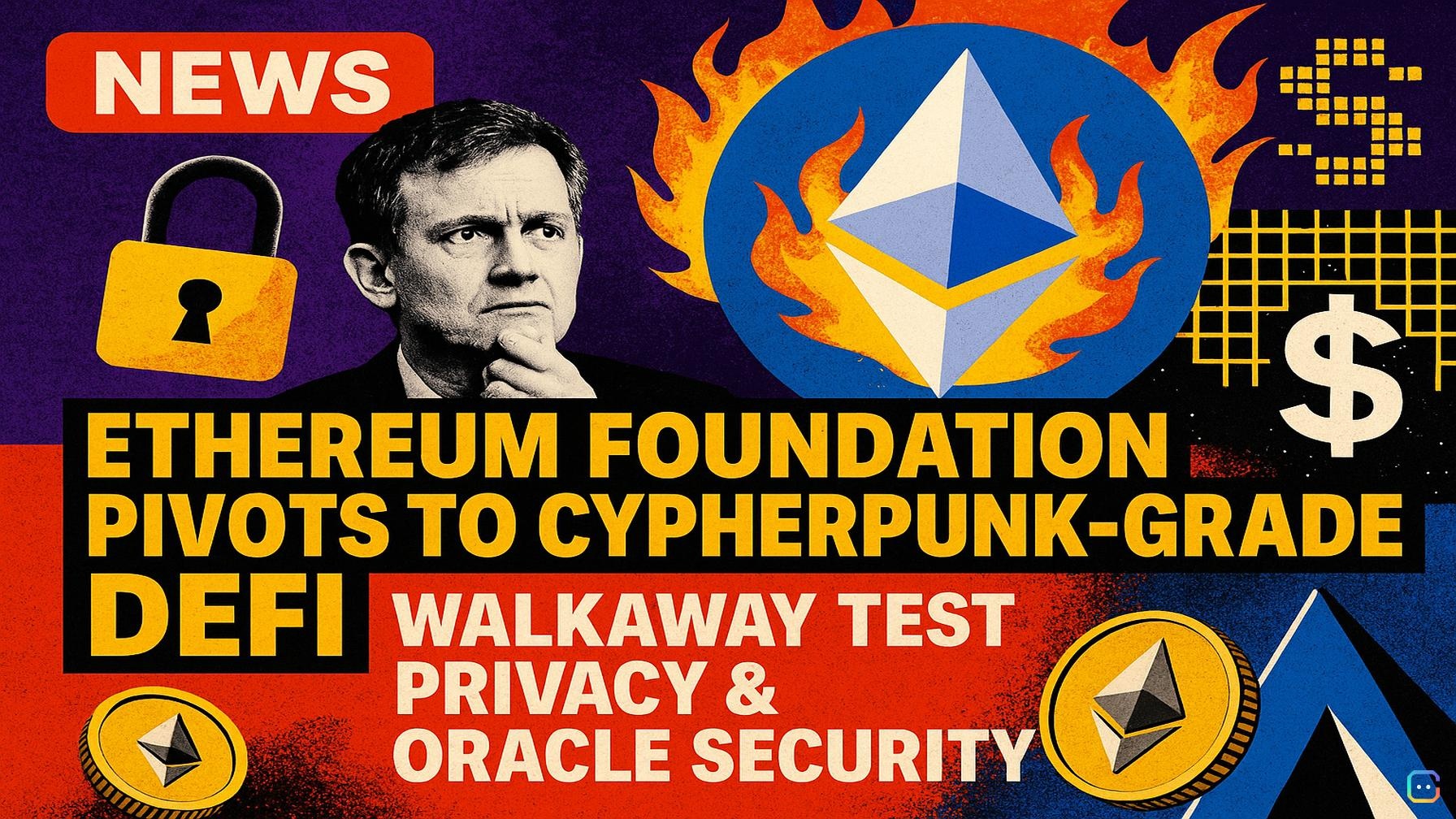
Bottom line: the Strawmap sketches a pragmatic path that mixes immediate protocol tweaks with ambitious cryptographic techniques. If the pieces come together, Ethereum could scale significantly while keeping node operation accessible — a win for throughput and decentralization alike.
Read more AI-generated news on: undefined/news
Source link
Related Posts: